Why competing with friends works, and how habits really form
A little friendly rivalry gets people moving. What research says about comparison, accountability, how long habits take, and keeping competition healthy.
 Aminasa
4 min read
How many times have you promised yourself you'd start walking "from tomorrow"? Then someone in the family group chat posts "12,000 steps today", and suddenly you're reaching for your shoes.
That isn't a coincidence. Comparing ourselves with others, and wanting to keep our word in front of them, are some of the strongest levers in human psychology. Used well, they build lasting habits. Used badly, they can crush motivation.
Why we compare ourselves with others
In 1954 the psychologist Leon Festinger proposed that people have a basic drive to evaluate their own abilities. When there's no objective yardstick, we compare ourselves with other people, and we prefer to compare with people who are similar to us1.
Steps are a perfect example. On your own, it's hard to know whether 8,000 a day is good or poor. In a group of five friends, being third tells you exactly where you stand.
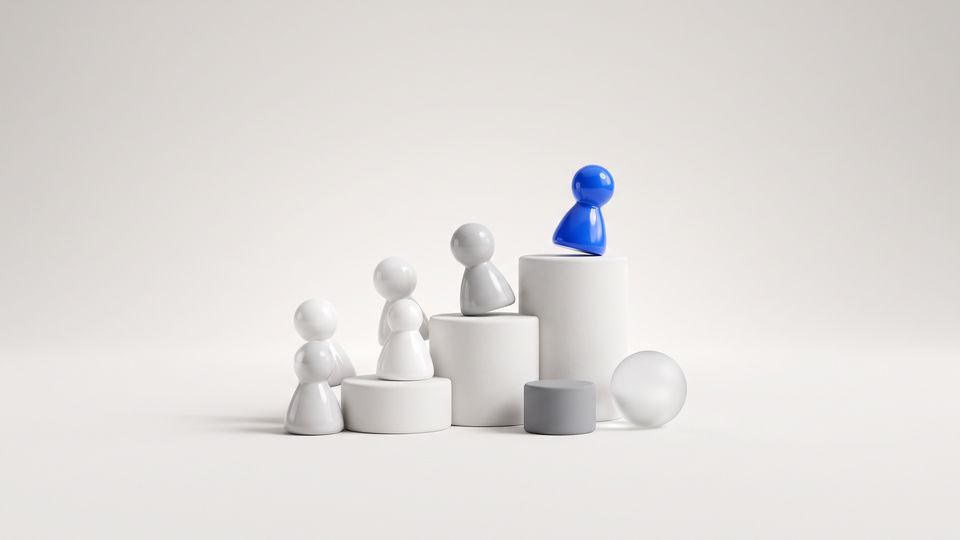
Comparison cuts both ways. A friend slightly ahead of you is inspiring, while someone far ahead can make you feel "this isn't for me". So build your group from people at roughly your level. Accountability adds a second push: once you've said out loud that you'll do something, you want to follow through.
What a large trial found
The STEP UP trial followed 602 adults with overweight or obesity from 40 US states. Each wore a step tracker, set a personal baseline and chose how much to raise their daily goal. For 24 weeks they played a game with points and levels, and they were randomly assigned to one of four groups: control, support, collaboration or competition2.
Compared with the control group, the competition group increased its average daily steps by 920 more. The support group added 689 and the collaboration group 6372. In the 12 weeks after the game ended, only the competition group was still walking significantly more than the controls2.
One caution: activity dropped in every group once the game stopped2. Competition gets people moving, but keeping them moving takes habit.
How long a habit really takes
In a well-known study, 96 volunteers picked one eating, drinking or activity behaviour and did it every day for 12 weeks in the same context, for example "after breakfast"3. The time it took for the behaviour to become automatic ranged from 18 to 254 days, with a median of 663.
The most encouraging finding: missing one opportunity did not materially affect the habit-forming process3. So if your streak breaks, don't throw in the towel. Just pick it up again tomorrow.
Context matters too. Tie your new habit to something you already do every day: after breakfast, after leaving work, after dinner. The more consistently you repeat it in the same situation, the more automatic it becomes3.
Friendly competition vs the toxic kind
- Compare with your past self as well. If this week's average beats last week's, you've already won.
- Respect different circumstances. Never mock a member who's injured, pregnant or older.
- Encourage, don't shame. Instead of calling out whoever is last, send them a kind word.
- Mix it up. Race each other one week, then chase a shared group total the next.
- Make a family group. Competing with parents and siblings gives you a daily reason to check in on each other.
If competition starts causing stress, arguments or overdoing it, take a break. And never push through pain just to protect your rank.
Setting up your group
- Pick 3–6 people. People you talk to most days and who move at a similar level work best.
- Run one simple weekly challenge. For example "a 7,000-step daily average this week" or "250,000 steps as a group".
- Make if-then plans. "If I'm under 4,000 steps by 13:00, then I'll walk for 15 minutes after lunch." Across 94 studies, plans like this had a medium-to-large effect on reaching goals4.
- Celebrate streaks. Mark day 7 and day 30 together.
- Nudge at the right moment. Researchers in mobile health argue that support works best when it arrives at the right time, in the right amount5. One cheer at midday beats ten at midnight.
For choosing a realistic target, see how many steps a day is enough. For timing your own reminders, read using notifications wisely.
Tracking it with Aminasa
In Aminasa you pick one of 100 pixel characters, create a group and invite friends with a code. Groups get daily and weekly step leaderboards, shared challenges such as a group step goal, and a one-tap cheer bell to nudge a friend. You only appear on the global leaderboard if you opt in, and others see just your display name, username, character and totals for steps, active calories, exercise minutes and Health Score, never your phone number or other health data.
Sources
- Festinger L. A theory of social comparison processes. Hum Relat. 1954;7(2):117–140 doi.org
- Patel MS, et al. Effectiveness of behaviorally designed gamification interventions with social incentives for increasing physical activity among overweight and obese adults across the United States: the STEP UP randomized clinical trial. JAMA Intern Med. 2019;179(12):1624–1632 doi.org
- Lally P, et al. How are habits formed: modelling habit formation in the real world. Eur J Soc Psychol. 2010;40(6):998–1009 doi.org
- Gollwitzer PM, Sheeran P. Implementation intentions and goal achievement: a meta-analysis of effects and processes. Adv Exp Soc Psychol. 2006;38:69–119 doi.org
- Nahum-Shani I, et al. Just-in-time adaptive interventions (JITAIs) in mobile health: key components and design principles for ongoing health behavior support. Ann Behav Med. 2018;52(6):446–462 doi.org
This article is not medical advice. It's general information and doesn't replace an examination, diagnosis or treatment by a doctor. If symptoms worry you, please see a healthcare professional.