Sitting all day at work? NEAT, sit-stand desks and movement breaks
September means long days at a desk again. How everyday movement (NEAT), two-minute walking breaks and sit-stand desks can offset the cost of sitting.
 Aminasa
5 min read
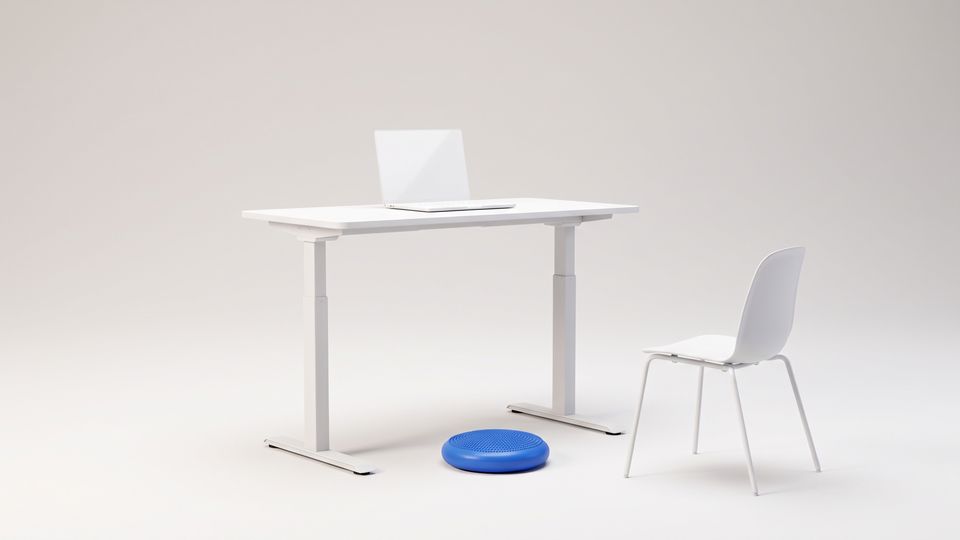
September brings everyone back to the office and the classroom. The active days of summer give way to long stretches at a desk: sitting in the car or bus, sitting at work, then sitting on the sofa in the evening. For many of us, that adds up to most of our waking hours.
The good news is that you don't need a gym membership to push back. Small movements spread across the day add up to more than you might think.
What NEAT is and why it matters
NEAT stands for non-exercise activity thermogenesis: the energy you spend on everything that isn't sleeping, eating or sport. Walking to work, typing, housework and even fidgeting all count1. Each of these small actions raises your metabolic rate, and together they make up the bulk of the energy you use beyond resting1.
People in farming and manual jobs tend to have high NEAT, while wealth and industrialised lifestyles tend to lower it1. Think of herders in the countryside: they rarely "work out", yet they're on their feet from dawn to dusk.
In one study, researchers tracked the posture of 10 lean and 10 mildly obese people every half-second for 10 days. The participants with obesity sat for about 2 hours a day longer2. If they had adopted the movement habits of the lean group, the researchers estimated, they could have burned roughly 350 extra kcal a day2.
How risky is sitting, really?
A pooled analysis of more than 1 million people found that those who were least active and sat more than 8 hours a day had a 59% higher risk of death than the most active people who sat less than 4 hours3.
There's an encouraging flip side. Among people doing about 60–75 minutes of moderate activity a day, sitting more than 8 hours was not linked to higher mortality3. Long hours of TV were a different story: that much activity reduced the extra risk but didn't remove it3.
Short breaks help as well. In a lab trial, 19 adults aged 45–65 with overweight or obesity sat for 5 hours after a standard sugary, fatty drink. When they got up every 20 minutes for 2 minutes of light or moderate walking, their rise in blood sugar was about 25–30% smaller, and their insulin response about 23% smaller, than when they sat without a break4.
The World Health Organization's 2020 guidelines recommend that people of all ages cut down on sedentary time. There isn't yet enough evidence to name a safe number of sitting hours, but any movement is better than none5.
Do sit-stand desks work?
A Cochrane review of 34 workplace studies found that sit-stand desks reduced sitting at work by about 100 minutes per workday in the first three months, and by about 57 minutes a day at three to twelve months6. The evidence quality was low, but the direction was consistent.
Standing all day isn't the goal, though. Standing for hours tires your legs and back too. What works best is changing position often: sit, stand, walk, repeat. If you don't have a special desk, put your laptop on a high shelf or cabinet and stand for 20–30 minutes a few times a day.
A simple routine for the working day
- Get up every 30–60 minutes. Walk, stretch or look out of a window for 2–3 minutes.
- Use a small glass. It empties faster, so you'll get up to refill it more often.
- Take calls standing. Better still, pace while you talk.
- Walk over instead of messaging. Have quick questions in person at a colleague's desk.
- Use the stairs and the far printer. Even one flight makes a difference.
- Walk after lunch for 10–15 minutes. Clear September days are a chance to get outside before winter sets in.
- Hold short meetings standing up. A 15-minute catch-up doesn't need chairs.
Don't forget the evening. After work it's easy to sit for another two or three hours in front of a screen. Get up between episodes, walk to the kitchen and back, and do chores like folding laundry or washing up on your feet. It all counts as NEAT1.
Students can use the same tricks: step out into the corridor between classes, and stand and stretch every 30 minutes while studying at home. If back or neck pain, leg swelling or numbness keeps coming back, see a doctor.
For how many steps to aim for, read how many steps a day is enough. To set up your daytime reminders, see using notifications wisely.
Tracking it with Aminasa
Aminasa doesn't track sitting time at the moment. What it does show is today's steps, plus free 7-day trends, so you can see whether your workday movement is adding up. The midday notification (13:00 by default, adjustable between 11:00 and 16:59) compares your steps and active calories with your goal and gives a gentle nudge if you're behind. Treat it as your cue to break up a long morning of sitting.
Sources
- Levine JA. Non-exercise activity thermogenesis (NEAT). Best Pract Res Clin Endocrinol Metab. 2002;16(4):679–702 doi.org
- Levine JA, et al. Interindividual variation in posture allocation: possible role in human obesity. Science. 2005;307(5709):584–586 doi.org
- Ekelund U, et al. Does physical activity attenuate, or even eliminate, the detrimental association of sitting time with mortality? A harmonised meta-analysis of data from more than 1 million men and women. Lancet. 2016;388(10051):1302–1310 doi.org
- Dunstan DW, et al. Breaking up prolonged sitting reduces postprandial glucose and insulin responses. Diabetes Care. 2012;35(5):976–983 doi.org
- Bull FC, et al. World Health Organization 2020 guidelines on physical activity and sedentary behaviour. Br J Sports Med. 2020;54(24):1451–1462 doi.org
- Shrestha N, et al. Workplace interventions for reducing sitting at work. Cochrane Database Syst Rev. 2018;12:CD010912 doi.org
This article is not medical advice. It's general information and doesn't replace an examination, diagnosis or treatment by a doctor. If symptoms worry you, please see a healthcare professional.