Why a consistent sleep schedule matters
How long you sleep matters, but so does when. Why regular sleep times may matter as much as hours in bed, and a simple plan to make them stick.
 Aminasa
4 min read
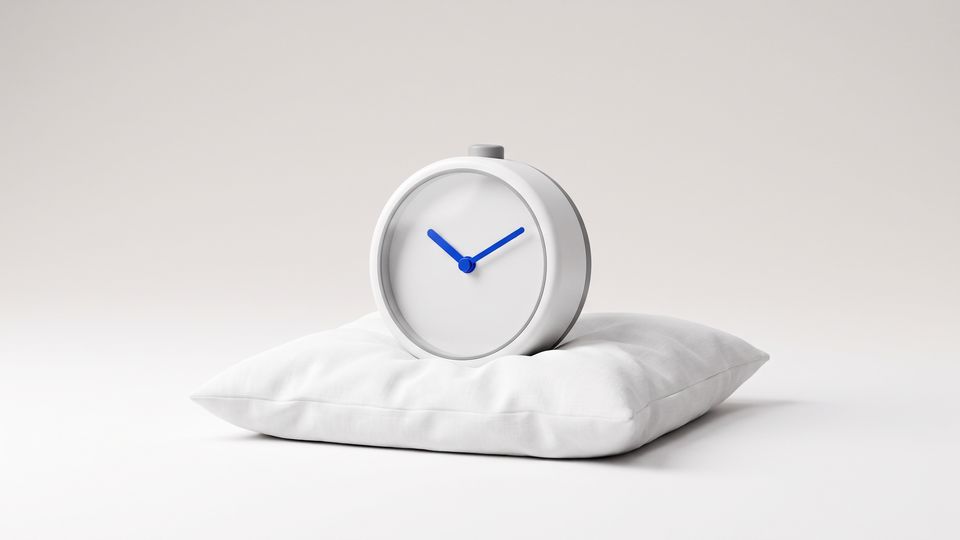
On weekdays your alarm goes off at 6:30. On Friday you stay up late, and at the weekend you sleep until ten. Then Monday morning arrives and you feel as if you've just stepped off a long-haul flight: heavy head, eyes that won't open.
Sound familiar? Most of us know that how long we sleep matters. Far fewer realise that when we sleep may matter just as much, or possibly more. Here's what the research says about sleep regularity, and a practical plan for getting your body clock back on track.
Why regularity matters
Researchers analysed more than 10 million hours of wrist-sensor data from 60,977 people in the UK Biobank. Sleep regularity turned out to be a stronger predictor of death from any cause than sleep duration1. Compared with the least regular fifth of participants, the more regular groups had a 20–48% lower risk of death from any cause1.
This was an observational study, so it doesn't prove that keeping regular hours will add years to your life. But the link held up after the researchers accounted for age, sex, lifestyle and a range of health factors1.
Why might regularity matter? Your body runs on a biological clock with a roughly 24-hour rhythm. It steers body temperature, metabolism and hormone release, making you sleepy at night and helping you wake in the morning2. Melatonin, a hormone released as it gets dark, helps match that internal rhythm to the cycle of light and darkness outside2. Staying up late and sleeping in at weekends can throw that rhythm off6.
How much sleep you need
Regular hours are not a substitute for enough sleep. The American Academy of Sleep Medicine and the Sleep Research Society recommend that adults sleep at least 7 hours a night on a regular basis3. The CDC suggests at least 7 hours for ages 18–60, 7–9 hours for ages 61–64 and 7–8 hours from 65 onwards4.
In other words, you need both: enough sleep, at roughly the same times.
Weekend "social jet lag"
Work and school schedules clash with many people's natural rhythms. Night owls in particular run up a sleep debt on workdays and try to pay it back at the weekend. Researchers call this gap between workdays and free days "social jet lag"5. Their work suggests it may affect wellbeing and the use of stimulants such as nicotine5.
That's why the US National Heart, Lung, and Blood Institute advises keeping the difference between your weeknight and weekend sleep schedule to no more than about an hour6.
What makes it hard in Mongolia
- Long winter nights. Getting up in the dark is tough. Light is the single biggest influence on your sleep-wake cycle2, so get outside in daylight every day6.
- Short summer nights. In June and July the sun sets late, and light can shift your sleep-wake cycle earlier or later, making it harder to fall asleep2. Keep your bedroom dark, and use heavy curtains if you need to.
- Naadam and celebrations. If late nights pile up, at least try to keep your wake-up time steady.
- Shift work. Night-shift workers often struggle both to fall asleep and to stay alert at work2. Bright light at work, fewer shift changes, caffeine only early in the shift, and a dark, quiet room for daytime sleep can all help6.
A one-week plan
- Fix your wake-up time. Get up at the same time every day, weekends and holidays included7.
- Work back to a bedtime. Choose a bedtime early enough to give you at least 7–8 hours of sleep7.
- Get morning daylight. Spend time outside every day and stay active6. Walking to work counts.
- Protect the last hour. Use the hour before bed for quiet time, and avoid intense exercise and bright screens6. Switch off devices at least 30 minutes before bed4.
- Keep caffeine to the first half of the day. Its effects can last up to 8 hours, and it's found in coffee, tea, some soft drinks and chocolate6.
- Mind late meals and alcohol. Avoid heavy meals within a few hours of bedtime, and skip alcohol before bed6.
- Keep naps short. If you struggle to sleep at night, limit naps to 20 minutes and take them earlier in the afternoon6.
If you can't fall asleep within about 20 minutes, get up and do something quiet in low light until you feel sleepy, and stay off your phone7. To learn what happens once you do drift off, read our guide to sleep stages.
Tracking it with Aminasa
Regularity makes up 20% of the Sleep part of your Health Score. Aminasa looks at how much your sleep duration varies across the last 7 nights (the standard deviation) and scores steadier nights higher; it needs at least 4 nights of data. For now it compares how long you sleep, not your bedtimes or wake-up times, so keep an eye on the clock yourself too. Your morning notification recaps last night's sleep.
Sources
- Windred DP, et al. Sleep regularity is a stronger predictor of mortality risk than sleep duration: a prospective cohort study. Sleep. 2024;47(1):zsad253 doi.org
- NINDS — Brain Basics: Understanding Sleep ninds.nih.gov
- Watson NF, et al. Recommended amount of sleep for a healthy adult: a joint consensus statement of the AASM and SRS. Sleep. 2015;38(6):843–844 doi.org
- CDC — About Sleep cdc.gov
- Wittmann M, et al. Social jetlag: misalignment of biological and social time. Chronobiol Int. 2006;23(1–2):497–509 doi.org
- NHLBI — Healthy Sleep Habits (2022) nhlbi.nih.gov
- AASM Sleep Education — Healthy sleep habits sleepeducation.org
This article is not medical advice. It's general information and doesn't replace an examination, diagnosis or treatment by a doctor. If symptoms worry you, please see a healthcare professional.