Tsagaan idee and protein: what Mongolian summer dairy offers
Summer dairy is a good protein source, but not all of it. See which foods are mostly protein, which are mostly fat, and how to enjoy them safely.
 Aminasa
4 min read
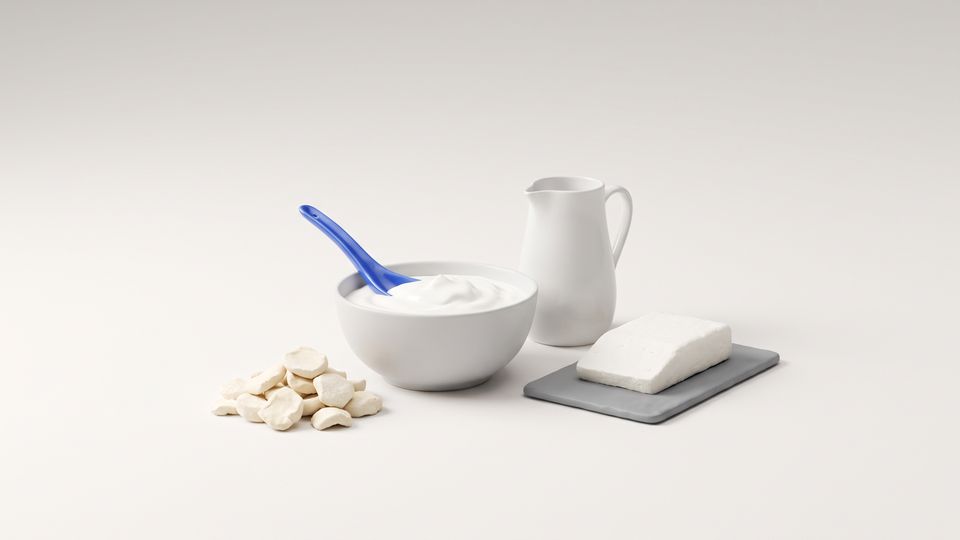
Visit a countryside family in summer and the table fills up with tsagaan idee, the "white foods": tarag (yogurt), aaruul (dried curds), eezgii (baked curd), urum (clotted cream), cheese and airag. These foods are offered first, as a mark of respect, and people often say they are "full of protein".
That's partly true. Some are rich in protein, some are mostly fat, and drying concentrates the calories as well. Here's how they compare, and how to enjoy them safely.
How much protein do you need?
The US National Academies set the adult Recommended Dietary Allowance at 0.8 g of protein per kilogram of body weight per day1. For a 70 kg person that's about 56 g. Think of it as a floor rather than a target: needs vary with age, activity and health3.
If you lift weights regularly, a bit more may help. A meta-analysis of resistance-training trials found that extra protein boosted muscle gains, but the benefit levelled off at around 1.6 g per kg per day2. If you have kidney disease, talk to your doctor before increasing your protein.
It's easier to get enough when you spread protein across the day instead of saving it for one big meal: yogurt in the morning, meat at lunch, a small piece of cheese in the afternoon. Harvard's Nutrition Source suggests keeping dairy moderate, around 1–2 servings a day, and getting protein from a variety of foods, including plants3.
Protein in tsagaan idee: a rough comparison
Mongolian dairy varies a great deal with the animal, the season and how it's made. So instead of exact values, the table uses comparable foods from USDA FoodData Central4. Treat the figures as approximate.
| Comparable food | Protein per 100 g | Fat per 100 g |
|---|---|---|
| Whole cow's milk | about 3.2 g | about 3.3 g |
| Sheep's milk | about 6 g | about 7 g |
| Plain whole-milk yogurt | about 3.5 g | about 3.3 g |
| Strained (Greek-style) yogurt | about 9 g | about 5 g |
| Cottage cheese | about 11 g | about 4 g |
| Hard cheese (cheddar) | about 24 g | about 34 g |
| Heavy cream | about 3 g | about 36 g |
| Butter | under 1 g | about 81 g |
Notice that sheep's milk carries more of both protein and fat than cow's milk. With liquid milk and yogurt, you need quite a lot to make a dent in your daily protein: a 250 g bowl of tarag gives about 9 g. Thicker, more concentrated foods such as cheese deliver more protein in a smaller portion.
Aaruul and eezgii: what drying concentrates
When curds are dried into aaruul or baked into eezgii, the water evaporates but the protein, fat and calories stay. If 100 g of fresh curd dries down to 50 g, everything that was in it now sits in those 50 g. Per 100 g, protein, fat and calories have all doubled.
So aaruul is a good protein source, but even small pieces are energy-dense. Count a handful as part of a meal rather than a "free" nibble. Some shop-bought aaruul also has added sugar, so check the label.
Urum, cream and butter are a different kind of food altogether. Heavy cream has about 36 g of fat per 100 g and butter about 81 g, with very little protein4. Treat them as flavour, not as a protein source, and measure them by the spoonful.
Airag and lactose
Airag is fermented mare's milk. Fermentation produces a small amount of alcohol, and how much depends on how long it has fermented. Pregnant women, children and anyone about to drive should treat airag as an alcoholic drink.
Some people get bloating or diarrhoea after drinking milk, often because their body doesn't break down lactose, the natural sugar in milk, very well. According to the US National Institutes of Health, yogurt and hard cheeses are lower in lactose than other dairy foods, and drinking milk in small amounts with meals may be easier to tolerate6. If symptoms persist, see a doctor.
Always boil raw milk
Raw milk can carry germs such as Brucella, Salmonella, E. coli, Listeria and Campylobacter, and products made from raw milk carry the same risk5. Children under 5, adults over 65, pregnant women and people with weakened immune systems are most likely to become seriously ill5.
Heating milk to a high enough temperature kills these germs5. In practice:
- Boil milk before drinking it or making tarag.
- Avoid raw milk or cream from sources you can't vouch for.
- Dairy spoils quickly in summer heat, so keep it in the fridge.
Tracking it with Aminasa
In Aminasa, take a photo of your meal and the AI identifies each dish and estimates its calories, protein, carbs and fat (a Premium feature, with 3 free tries). Homemade dairy varies from family to family, so adjust the portion or grams yourself and remove anything it got wrong before saving. Over the day you get a rough picture of how much protein you're actually eating. For the meat-and-dough side of the table, see buuz and khuushuur calories.
Sources
- National Academies — Dietary Reference Intakes for Energy, Carbohydrate, Fiber, Fat, Fatty Acids, Cholesterol, Protein, and Amino Acids (2005) nap.nationalacademies.org
- Morton RW, Murphy KT, McKellar SR, et al. A systematic review, meta-analysis and meta-regression of the effect of protein supplementation on resistance training-induced gains in muscle mass and strength in healthy adults. Br J Sports Med. 2018;52(6):376–384 doi.org
- Harvard T.H. Chan School of Public Health — The Nutrition Source: Protein nutritionsource.hsph.harvard.edu
- USDA — FoodData Central fdc.nal.usda.gov
- CDC — Raw Milk (2025) cdc.gov
- NIDDK (NIH) — Eating, Diet, & Nutrition for Lactose Intolerance niddk.nih.gov
This article is not medical advice. It's general information and doesn't replace an examination, diagnosis or treatment by a doctor. If symptoms worry you, please see a healthcare professional.