Practical tips for logging your meals by photo
The right angle, good light and the whole plate in view. How to check and correct the AI's estimate, and why drinks, oil and sauces deserve extra care.
 Aminasa
4 min read
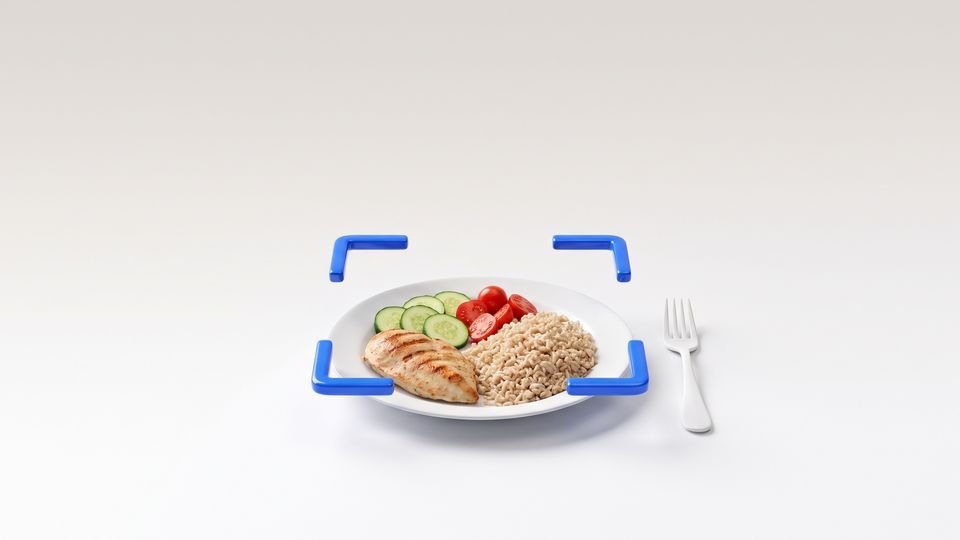
Snapping a photo of your dinner before you eat takes a few seconds. But if the picture is dark, half the plate is cut off and your cup of milk tea sits just outside the frame, the estimate will come up short too.
Photo logging is the easiest way to keep a food diary. A handful of simple habits makes the numbers a lot more useful.
Why logging helps
A systematic review of 22 studies found a consistent link between self-monitoring (tracking what you eat, how much you move or what you weigh) and greater weight loss. The authors also noted that the evidence was weak because of the studies' methodological limitations1.
Photos make that habit far easier. They are quicker than writing things down and they jog your memory. In a review of image-assisted methods, every included study found that images reduced under-reporting compared with traditional methods2. Estimating portion size from a picture, however, remains the method's main challenge2.
How to take a good photo
- From above, or at about 45°. A top-down shot shows everything on the plate. A 45° angle helps show height and volume. For soup or anything in a deep bowl, shoot a little from the side.
- Use good light. Near a window or under a bright ceiling light works best. Flash tends to cause glare and harsh shadows.
- Get the whole plate in. When the rim of the plate is in the frame, portion size is easier to judge.
- Keep foods apart. If rice, meat and salad sit slightly apart, the AI can tell them apart more easily.
- Add something for scale. Put a fork, spoon or your hand next to the plate. Some research apps ask users to place a reference object in the photo for exactly this reason2.
- Photograph before you eat. Guessing the original portion from a half-eaten plate is hard.
- One photo per meal. Fit the food and your drink into the same frame. If you forget the drink, take a separate photo of it.
- Shared plates. If there's one big platter of buuz or khuushuur on the table, photograph the portion on your own plate, or adjust the grams afterwards to what you actually ate.
Check and correct the AI's estimate
Aminasa identifies each dish in the photo and estimates its portion, grams, calories, protein, carbs and fat. Take half a minute to check before you save:
- Portion and grams. Was it five buuz or three? When you change the grams, the calories and nutrients update to match.
- Wrong items. Remove anything you didn't eat, like a garnish or a dish that belonged to someone else.
- Meal type. Pick the right one: breakfast, lunch, dinner or snack.
- Eating out. Restaurant and canteen portions can differ from what you serve at home, so double-check the grams.
Don't forget drinks, oil and sauces
These are the things photos most often miss:
- Milk tea. A few bowls a day add up. Whole milk alone has about 61 kcal per 100 g3, and butter or toasted millet pushes the total higher.
- Cooking oil. Vegetable oil has 884 kcal per 100 g, so a single tablespoon comes to roughly 120 kcal3. The oil in khuushuur or tsuivan is almost invisible in a photo.
- Mayonnaise and sauces. A spoonful of mayonnaise in a salad or butter on bread is small, but energy-dense.
- Sweet drinks and juice. WHO advises keeping free sugars below 10% of your daily energy intake, and notes that even fruit juice without added sugar contains significant amounts of free sugars4.
If the AI didn't pick up a drink or sauce separately, nudge the grams up a little or photograph the drink on its own. Milk tea also brings a lot of salt, which we cover in salt and milk tea.
Estimates, not lab values
AI results are approximations. Don't worry whether a meal was 650 or 720 kcal. What matters is logging consistently over weeks and watching the trend. An imperfect log you keep up is worth far more than a perfect one you abandon. Our guide to buuz and khuushuur calories has more on traditional dishes.
A good way to start is to log every meal for the first seven days. That gives you a clear picture of how you really eat. Then choose the one meal that brings the most calories and start by changing just that.
If you follow a diet prescribed by your doctor, for example for diabetes, talk through your numbers with your doctor or a dietitian.
Tracking it with Aminasa
Take a photo of your meal in Aminasa and AI identifies each dish, including Mongolian favourites like buuz, khuushuur, tsuivan, banshtai tsai and milk tea, then estimates calories, protein, carbs and fat. Food recognition is part of Premium, and you can try it three times for free. Because the photo is sent to Google Gemini for recognition, AI advice needs to be switched on in Settings; Aminasa analyses the photo and then discards it rather than storing it.
Sources
- Burke LE, Wang J, Sevick MA. Self-monitoring in weight loss: a systematic review of the literature. J Am Diet Assoc. 2011;111(1):92–102 doi.org
- Boushey CJ, et al. New mobile methods for dietary assessment: review of image-assisted and image-based dietary assessment methods. Proc Nutr Soc. 2017;76(3):283–294 doi.org
- USDA — FoodData Central fdc.nal.usda.gov
- WHO — Healthy diet fact sheet who.int
This article is not medical advice. It's general information and doesn't replace an examination, diagnosis or treatment by a doctor. If symptoms worry you, please see a healthcare professional.