Salt and milk tea: why Mongolia eats twice the recommended salt
Adults in Mongolia eat about 10.5 g of salt a day, twice WHO's limit. Here's what that means for blood pressure and how to cut back, starting with milk tea.
 Aminasa
4 min read
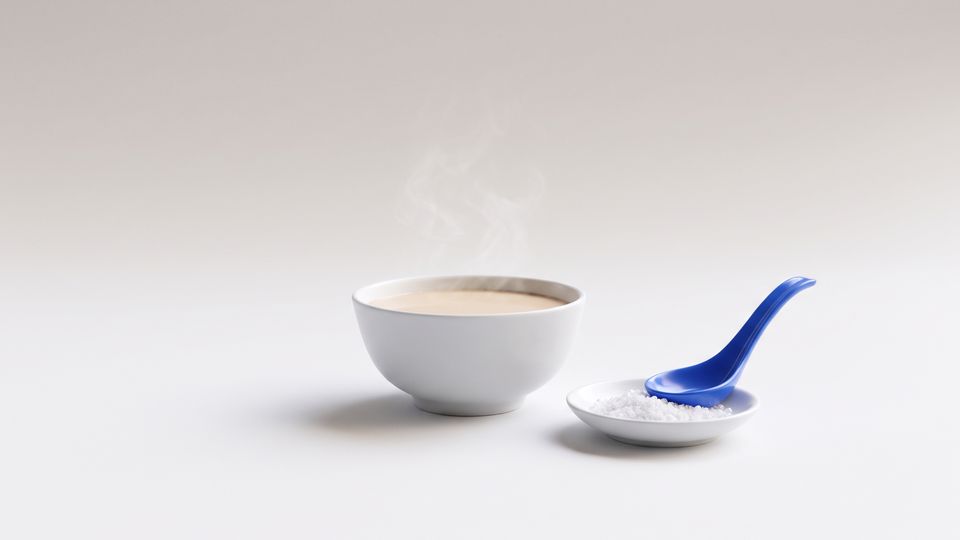
In many Mongolian homes the day starts with a pot of suutei tsai, milk tea, and the salt goes in straight from the bag without anyone measuring. Unsalted milk tea tastes flat to most of us. That's not a fact about tea; it's a habit we learned as children.
It's a habit with a cost. Adults in Mongolia eat an average of 10.5 g of salt a day2, more than twice the limit the World Health Organization (WHO) recommends1. The good news is that taste can be retrained.
How much salt does Mongolia eat?
The 2019 national STEPS survey of people aged 15–69 found an average intake of 10.5 g of salt a day: 11.9 g for men and 9.0 g for women2. In the same survey, 17.3% said they always or often add salt or salty sauce at the table, and 11.0% often eat processed foods high in salt2.
WHO advises adults to keep salt below 5 g a day, which is less than 2 g of sodium and just under a teaspoon1. The global adult average is around 11 g, so this isn't a uniquely Mongolian problem1, but it is a big one.
Salt and blood pressure
The main harm from too much salt is raised blood pressure, which increases the risk of cardiovascular disease1. WHO defines hypertension as blood pressure of 140/90 mmHg or higher, and most people with it feel no symptoms at all3.
In Mongolia, 23.6% of adults have raised blood pressure (140/90 or higher, or taking medication for it), and 43.2% of those are not on any treatment2.
Even a modest cut helps. A Cochrane meta-analysis of 34 trials found that eating about 4.4 g less salt a day for at least four weeks lowered blood pressure by an average of 4.2 mmHg systolic and 2.1 mmHg diastolic4. In people who already had high blood pressure, the drop was larger, about 5.4/2.8 mmHg4.
Where salt hides
Salt doesn't only come from the salt bag. Watch out for:
- Milk tea. If you drink several bowls a day, small pinches add up.
- Soups and bansh soup. Most of us barely notice the salt in broth.
- Pickled vegetables. They are vegetables, but very salty ones.
- Sausages, cured and smoked meats. Processed meat is a major source of salt1.
- Bread and snacks. WHO lists them among the main sources of sodium1.
- Instant noodles and sauces. Seasoning sachets and soy sauce are high in salt1.
On packaged food, multiply the sodium figure on the label by 2.5 to get the approximate amount of salt1.
Making milk tea less salty, step by step
You don't have to switch to unsalted tea overnight. Your palate adapts. In one study, people who ate a low-salt diet for five months came to prefer less salt in their food5.
- Measure with a spoon. Instead of pouring from the bag, find out how many spoonfuls you actually use now.
- Trim a little each week. Wait until the new taste feels normal, then cut back again.
- Add salt at the end. Taste the finished tea first, then salt it. You'll usually add less.
- Agree as a family. Make the pot lightly salted and let people add a pinch to their own bowl.
- Flavour soups with other things. Onion, garlic, fresh herbs and pepper add taste without salt.
- Take the salt shaker off the table. It breaks the habit of salting food before tasting it.
- Go even lighter for children. WHO advises that children aged 2–15 have less than the adult limit, scaled to their energy needs1.
Vegetables, iodised salt and checking your blood pressure
Potassium can blunt the effect of sodium on blood pressure, and fresh fruit and vegetables are an easy way to get more of it6. WHO also suggests swapping regular table salt for lower-sodium salt substitutes that contain potassium1. If you have kidney disease or take medicines that affect potassium levels, check with your doctor before using them.
Don't give up iodised salt while you cut back. WHO recommends that all salt consumed be iodised, because iodine supports brain development in unborn babies and young children1. Use less, but make it iodised.
The only way to know whether you have hypertension is to have your blood pressure measured by a health professional3. Have it checked regularly at your family clinic, and see a doctor if readings on different days are 140/90 or higher. If you take blood pressure medication, don't stop it without medical advice. Get urgent help if you have a severe headache, chest pain or difficulty breathing.
Tracking it with Aminasa
Aminasa doesn't measure salt intake or blood pressure, but it does track physical activity, another lever for healthy blood pressure. WHO recommends at least 150 minutes of moderate activity a week to help prevent hypertension3. Aminasa shows your exercise minutes, steps and resting heart rate from your Apple Watch, and the midday notification gives you a gentle nudge if you're behind your step goal.
Sources
- WHO — Sodium reduction fact sheet who.int
- WHO / Ministry of Health Mongolia — Mongolia Fourth National STEPS Survey 2019, Fact Sheet extranet.who.int
- WHO — Hypertension fact sheet who.int
- He FJ, Li J, MacGregor GA. Effect of longer term modest salt reduction on blood pressure: Cochrane systematic review and meta-analysis of randomised trials. BMJ. 2013;346:f1325 doi.org
- Bertino M, Beauchamp GK, Engelman K. Long-term reduction in dietary sodium alters the taste of salt. Am J Clin Nutr. 1982;36(6):1134–1144 doi.org
- WHO — Healthy diet fact sheet who.int
This article is not medical advice. It's general information and doesn't replace an examination, diagnosis or treatment by a doctor. If symptoms worry you, please see a healthcare professional.